The New Morning Ritual
Walk into any forward-thinking UK café in 2025 and you're likely to see it on the menu: lion's mane latte, ashwagandha oat flat white, functional mushroom espresso. M&S launched an adaptogenic range. Whole Foods stocks half a shelf with functional coffee products. Google searches for "adaptogenic coffee" have increased 400%+ in 18 months.
The concept is straightforward: take the world's most popular psychoactive beverage and add compounds that counterbalance its downsides while amplifying its cognitive benefits. Whether this actually works depends entirely on the compounds used and the doses included.
The Problem with Regular Coffee
Coffee's mechanism is primarily adenosine receptor blockade — it prevents adenosine (the brain's fatigue signal) from registering, creating alertness. But caffeine also triggers cortisol release, inhibits GABA activity, and drives sympathetic nervous system activation — which is why sensitive people experience anxiety, jitteriness, and a notable energy crash 2–4 hours after their cup.
For people under chronic stress, this cortisol spike compounds an already elevated baseline. For people who are anxious, the GABAergic suppression worsens symptoms. For everyone, the afternoon crash is a consequence of adenosine binding all at once when caffeine clears.
What Adaptogens Actually Do in Coffee
The rationale for adaptogenic coffee is pharmacologically sound:
- L-Theanine — counters caffeine's anxiogenic effects without reducing alertness. Increases GABA activity and alpha brain waves. The most evidence-backed coffee addition available. At 2:1 L-Theanine:caffeine, jitteriness and anxiety are significantly reduced in multiple trials.
- Ashwagandha — reduces cortisol, countering the HPA axis activation caffeine triggers. Smooths the energy curve and reduces the spike-and-crash pattern.
- Lion's Mane — stimulates NGF, supporting the cognitive benefits of the combined drink beyond what caffeine alone provides. Promotes long-term neuroplasticity.
- Reishi — adaptogenic, mildly anxiolytic, immune-supportive. Reduces the cortisol-immune suppression that daily coffee can contribute to.
Does It Actually Work?
For L-Theanine specifically: yes, definitively. The L-Theanine + caffeine combination is one of the most consistent findings in cognitive supplement research. Multiple randomised trials show it improves attention and reduces anxiety relative to caffeine alone.
For the mushroom adaptogens: the evidence is strong for the compounds themselves, but the key question is dose. Many adaptogenic coffee blends contain 50–150mg of lion's mane per serving — a fraction of the 500mg+ shown to have measurable NGF effects in trials. Low-dose inclusion for marketing is common.
If the product lists exact doses above clinical thresholds, it works. If it hides doses in "proprietary blends," assume they are underdosed.
The Best Approach: Add Your Own
Rather than buying pre-blended mushroom coffee (which may compromise on dose or freshness), adding a functional infusion to your existing coffee gives you control:
- Keep your preferred coffee and roast
- Add L-Theanine + Lion's Mane + Rhodiola at clinically meaningful doses
- Adjust dose independently of caffeine
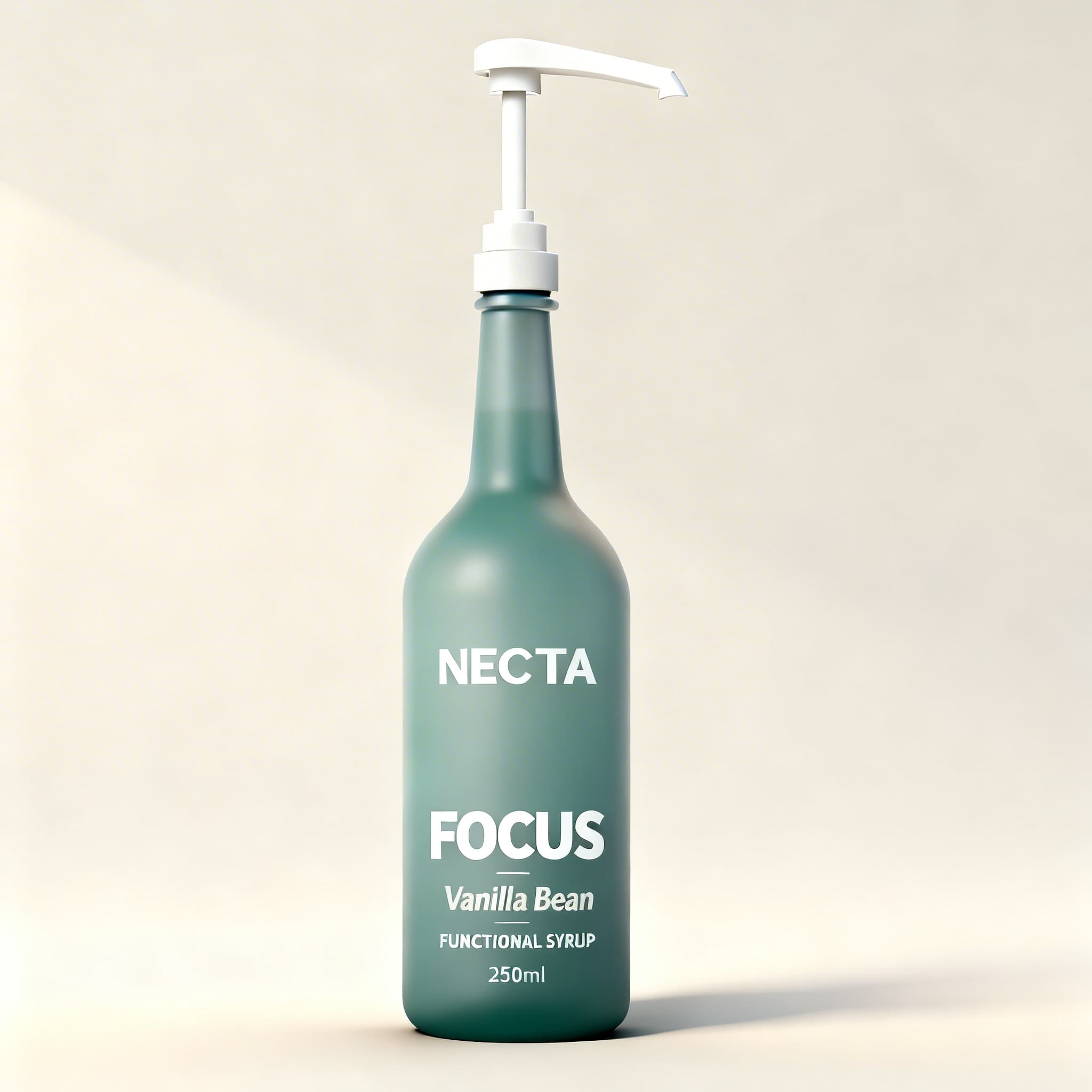
This is the approach NECTA FOCUS is built for — 2 pumps into any drink, delivering Lion's Mane 500mg, L-Theanine 80mg, and Rhodiola 200mg in a formula that's designed to complement rather than replace your coffee.
What to Look for in an Adaptogenic Coffee Product
If you prefer an all-in-one product:
- Lion's Mane at 300mg+ per serving (from fruiting body, not mycelium)
- L-Theanine at 80mg+ per serving
- Exact doses listed — not "proprietary blend"
- Organic or third-party tested for heavy metals (mushrooms bioaccumulate contaminants)
- Realistic price point — a genuine dose of quality Lion's Mane extract is not cheap