What Is Lemon Balm?
Lemon Balm (Melissa officinalis) is a perennial herb in the mint family, native to southern Europe and Central Asia. It has been used medicinally since at least the Middle Ages — Paracelsus called it "the elixir of life," and it has been a staple of European herbal traditions for stress, anxiety, and sleep for centuries. In clinical pharmacology, it is classified as a nervine — a herb that has a calming, toning effect on the nervous system.
The GABA Mechanism
Lemon balm's primary mechanism of action is inhibition of GABA transaminase — the enzyme responsible for breaking down GABA in the brain. GABA (gamma-aminobutyric acid) is your brain's primary inhibitory neurotransmitter. When GABA activity is high, the brain enters a calmer, less excitable state. When it's low, the result is anxiety, restlessness, and racing thoughts.
By inhibiting the enzyme that degrades GABA, lemon balm effectively increases GABA availability — producing anxiolytic effects through the same fundamental mechanism as benzodiazepines (though with much weaker receptor affinity and no dependency or withdrawal risk).
Additionally, lemon balm has antioxidant properties and inhibits acetylcholinesterase — the enzyme that breaks down acetylcholine — potentially supporting memory and cognitive function alongside its calming effects.
Clinical Evidence
Several well-designed trials support lemon balm's anxiolytic effects:
- Cases et al. (2011) — a randomised trial found that Cyracos (a standardised lemon balm extract) at 600mg per day significantly reduced anxiety and insomnia in adults with mild to moderate anxiety disorders after 15 days.
- Kennedy et al. (2002) — a crossover trial found that a single dose of lemon balm extract significantly improved mood and reduced anxiety in healthy volunteers within 1–3 hours.
- Müller & Klement (2006) — lemon balm combined with valerian significantly improved sleep quality in children with restlessness and sleep disorders.
An important pattern across the lemon balm literature: effects are relatively fast-acting (within hours to days) compared to adaptogens like ashwagandha that build over weeks. This makes it useful for acute anxiety management as well as long-term daily supplementation.
How It Stacks With Other Calm-Promoting Compounds
Lemon balm's GABA transaminase inhibition is complementary to compounds that work through different mechanisms:
- Lemon Balm + Chamomile — chamomile binds to GABA-A receptors directly; lemon balm increases GABA availability. Together they address the GABA system from both sides.
- Lemon Balm + Ashwagandha — ashwagandha reduces cortisol (upstream stress hormone) while lemon balm addresses the neurological symptom of anxiety (GABA). Complementary mechanisms.
- Lemon Balm + L-Theanine — both promote alpha brain wave activity through different pathways. The combination may be more effective than either alone for daytime calm focus.
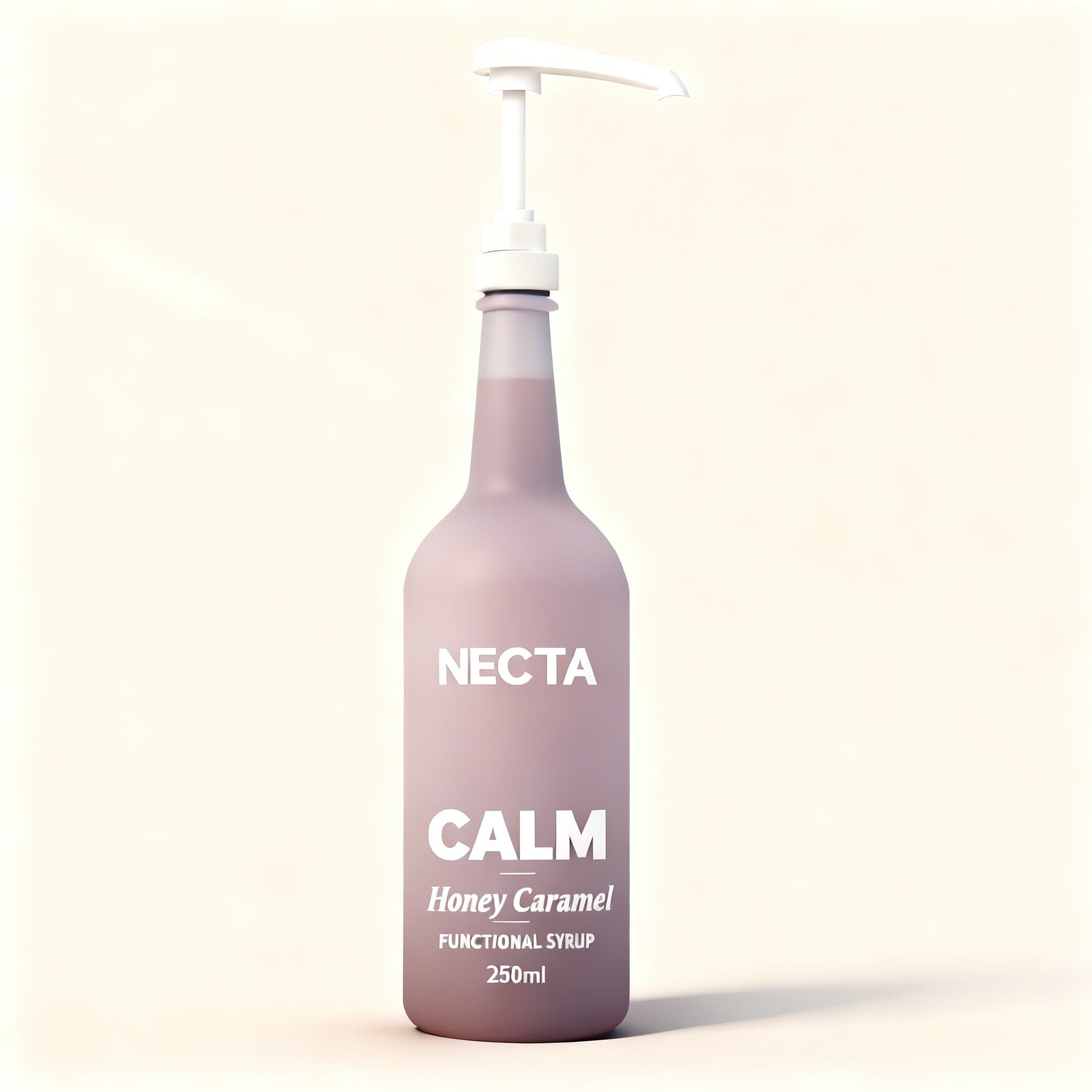
This three-way combination — chamomile, lemon balm, and ashwagandha — is the formula in NECTA CALM.
Dosage and Safety
Effective doses in clinical studies: 300–600mg of standardised lemon balm extract (standardised to rosmarinic acid content). Fresh herb tea provides significantly lower doses.
Lemon balm is exceptionally safe. It is approved as GRAS (Generally Recognised As Safe) by the FDA and has no known serious adverse effects at normal doses. The only practical caution: lemon balm may have additive effects with sedative medications — consult a GP if taking prescribed anxiolytics or sleep medications.