Why Functional Mushrooms Are Having a Moment
The global functional mushroom market is projected to exceed $10 billion by 2027. In the UK, mushroom-based supplements, teas, and coffees have moved from specialist health shops to mainstream supermarket shelves. But the category suffers from a quality and clarity problem: genuinely effective products sit alongside low-dose, poorly extracted products making identical claims.
This guide covers the five most established functional mushrooms — what the evidence actually shows for each, how they differ, and how to choose quality products.
Lion's Mane (Hericium erinaceus) — The Brain Mushroom
Primary benefit: Cognitive function, neuroplasticity, mood
Active compounds: Hericenones (fruiting body), erinacines (mycelium)
Mechanism: Stimulates nerve growth factor (NGF) and BDNF production — proteins critical for neuron growth, maintenance, and new memory formation
Evidence:
- Mori et al. (2009) RCT: 3g/day for 16 weeks significantly improved cognitive scores in adults with mild cognitive impairment; scores declined after stopping
- 2023 RCT in Scientific Reports: 1.8g/day for 28 days improved working memory speed in young healthy adults
- Multiple studies showing anxiety and depression reduction
Best for: Focus, memory, brain fog, long-term cognitive health
Effective dose: 500mg–1g of fruiting body extract daily (dual extracted)
Time to effect: 4–12 weeks for cognitive benefits; anxiety benefits sometimes faster
Reishi (Ganoderma lucidum) — The Calm Mushroom
Primary benefit: Immune support, stress, sleep quality
Active compounds: Triterpenes (ganoderic acids), beta-glucans, polysaccharides
Mechanism: Immune modulation via beta-glucans; mild anxiolytic effect via GABA receptor interaction; anti-inflammatory via triterpenes
Evidence:
- Multiple RCTs showing immune marker improvements and reduced fatigue in cancer patients
- A 2012 randomised trial found reishi extract significantly improved fatigue and quality of life in breast cancer patients
- Studies showing reduced anxiety and sleep improvements, though often in clinical populations
Best for: Immune support, winding down, sleep quality, stress
Effective dose: 1–1.5g extract daily; requires dual extraction (water + alcohol) to access both beta-glucans and triterpenes
Taste note: Reishi is notably bitter — flavour masking or capsule form is often preferable
Cordyceps (Cordyceps militaris) — The Energy Mushroom
Primary benefit: Physical energy, oxygen utilisation, exercise performance
Active compounds: Cordycepin, adenosine, beta-glucans
Mechanism: Increases ATP synthesis efficiency; improves oxygen utilisation (VO2 max); may mimic adenosine signalling in mitochondria
Evidence:
- A 2016 randomised trial in older adults found C. militaris extract significantly improved VO2 max and lactate threshold
- Studies in healthy young adults show mixed results — some positive, some null, likely due to dose variation
- Generally, more consistent benefits in less-trained populations and older adults
Best for: Physical endurance, altitude adaptation, energy without stimulants
Effective dose: 1–3g C. militaris extract (avoid Ophiocordyceps sinensis wild-harvested — unsustainable and expensive; C. militaris is farmed and has equivalent cordycepin content)
Chaga (Inonotus obliquus) — The Antioxidant Mushroom
Primary benefit: Antioxidant protection, immune support, anti-inflammation
Active compounds: Melanin, superoxide dismutase, betulinic acid, polyphenols, beta-glucans
Evidence level: Mostly in vitro and animal studies; limited but growing human data
Best for: General antioxidant support, immune maintenance, inflammation
Note: Chaga grows on birch trees and bioaccumulates compounds from the tree — wild-harvested birch chaga is preferable to chaga grown on sawdust. High in oxalates — those prone to kidney stones should use with caution.
Turkey Tail (Trametes versicolor) — The Immune Mushroom
Primary benefit: Immune function, gut microbiome, adjunct cancer therapy
Active compounds: PSK (Polysaccharide-K), PSP (Polysaccharide-Peptide), beta-glucans
Evidence: Most clinically studied functional mushroom overall
- PSK approved in Japan as cancer therapy adjunct since 1977 — used in thousands of patients across multiple RCTs
- NIH-funded Phase 1 trial showed turkey tail increased NK cell and T-cell populations in breast cancer patients post-radiotherapy
- Prebiotic effects demonstrated in healthy adults — increased Lactobacillus and Bifidobacterium significantly
Best for: Immune support, gut health, those undergoing or recovering from cancer treatment (with oncologist approval)
Effective dose: 1–3g hot water extract daily
How to Compare Quality Across Products
| What to Check | Why It Matters |
|---|---|
| Fruiting body vs mycelium | Fruiting body contains higher active compound concentrations; mycelium on grain is mostly starch |
| Extraction method | Hot water extracts beta-glucans; alcohol extracts triterpenes. Dual extraction gives the full profile. |
| Beta-glucan % listed | The most reliable quality indicator — should be at least 20–30% |
| Dose per serving | Match to clinical trial doses (500mg–3g depending on mushroom) |
| No grain filler | Check for "oats," "rice," or "maltodextrin" in the ingredient list — these indicate mycelium products |
Stacking Functional Mushrooms
Different mushrooms complement each other well because their mechanisms don't overlap:
- Focus stack: Lion's Mane + Cordyceps
- Immune stack: Turkey Tail + Reishi + Chaga
- Balanced stack: Lion's Mane + Reishi + Cordyceps (the classic trio)
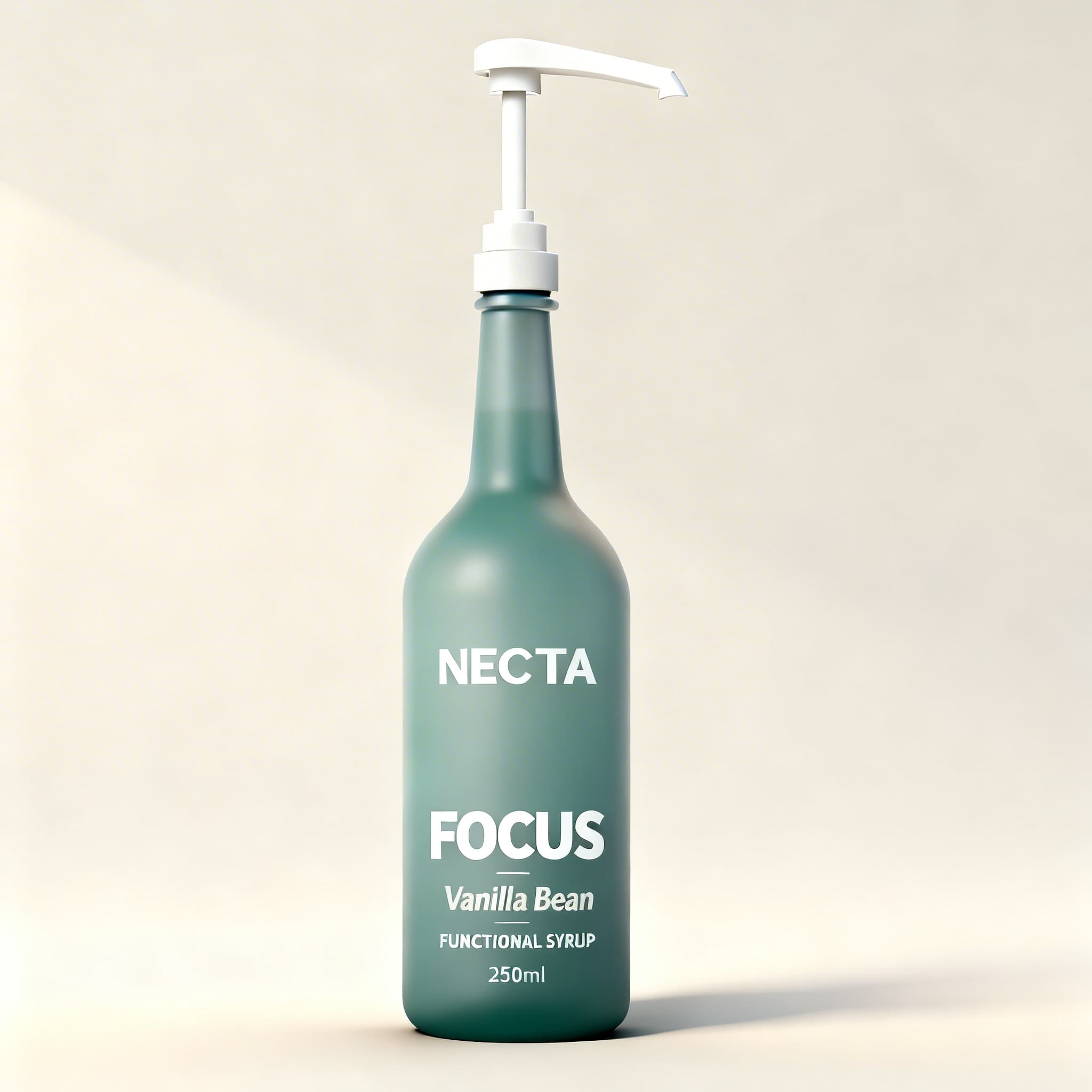
NECTA FOCUS centres on Lion's Mane for cognitive performance. NECTA IMMUNITY incorporates Reishi for immune and stress support.
Bottom Line
The five major functional mushrooms each have distinct, evidence-backed benefits: Lion's Mane for cognition, Reishi for immune and calm, Cordyceps for physical energy, Turkey Tail for immune and gut health, Chaga for antioxidant protection. Quality matters enormously — fruiting body extract with stated beta-glucan content from a reputable source is the minimum bar. Used consistently at appropriate doses, functional mushrooms are among the most evidence-backed daily supplements available.