The Powder Problem Nobody Talks About
Here's something the adaptogen industry doesn't like to admit: most people who buy adaptogen powders stop taking them within weeks. Not because adaptogens don't work. Because the powders are genuinely unpleasant to deal with every day.
Grainy texture that never fully dissolves. A chalky, bitter aftertaste that lingers in every drink you add it to. That gritty layer of undissolved powder sitting at the bottom of your coffee. The mess of a scoop you have to level off. The tub sitting on your counter collecting dust because you keep forgetting — or actively avoiding — taking it.
This isn't a minor annoyance. Adaptogens are cumulative. They only work if you take them every single day for weeks and months. A format that makes daily use miserable is, functionally, a supplement that doesn't work — because you won't take it consistently enough for it to.
Liquid adaptogens solve this completely. And almost no one in the UK actually sells them.
What Are Liquid Adaptogens?
Liquid adaptogens are adaptogenic herbs, mushrooms, and botanicals delivered in a liquid format — syrup, concentrated infusion, or shot — rather than capsules, tablets, or powder. The active compounds are identical: ashwagandha withanolides, lion's mane hericenones, rhodiola rosavins, reishi polysaccharides. What changes is the delivery — and delivery determines whether you actually take the thing consistently.
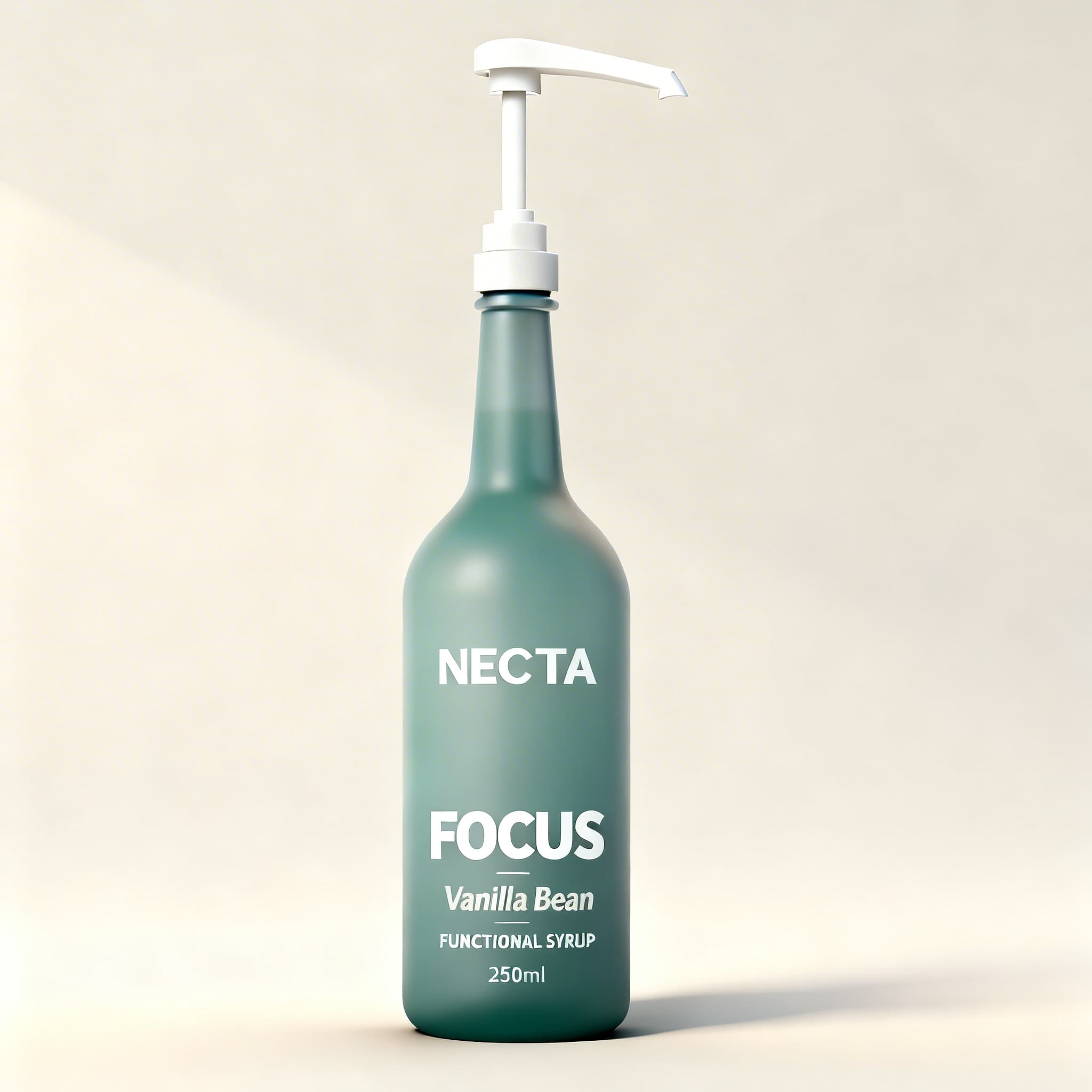
Two pumps into your morning coffee. Stir once. Done. No measuring, no clumping, no aftertaste, no texture. It just disappears into whatever you're already drinking and you get on with your morning. That's the entire point.
Why the UK Supplement Market Is Still Stuck on Powder
Most adaptogen brands sell powder because it's cheap to manufacture at scale. You buy the raw herb extract, blend it with flavourings, pack it into tubs. It requires minimal investment in formulation and no specialised liquid production infrastructure. The economics strongly favour powder — not the customer experience.
The result: an entire category where most products are genuinely difficult to use consistently, sold in a format optimised for manufacturing margins, not for the people actually trying to build a daily wellness routine. Walk into any UK health food shop or browse any supplement retailer and you'll see the same thing: shelves of powder tubs in various forms of half-eaten dishevelment, because nobody actually finishes them.
Liquid adaptogen supplements — properly formulated, full-dose, high-quality ones — are rare in the UK. Most "liquid" products are either old-fashioned alcohol tinctures (25–40% ethanol, not something you want daily at meaningful doses) or underdosed ready-to-drink beverages containing token amounts of adaptogen for marketing purposes. A genuine liquid adaptogen supplement, containing clinical doses of real standardised extracts in a clean, palatable liquid base, is genuinely hard to find.
Why Liquid Format Is Scientifically Superior
Faster, More Consistent Absorption
Capsules and tablets must disintegrate in stomach acid before any active compounds can be absorbed — a process that takes 20–45 minutes and varies significantly based on stomach conditions, what you've eaten, and individual gut motility. Liquid adaptogens bypass this entirely. Active compounds are already dissolved and begin absorbing immediately in the upper gastrointestinal tract. Studies on liquid versus solid herbal preparations consistently show 30–50% faster peak plasma concentrations. You get more, sooner, every time.
No Pill Fatigue
Taking 4–6 capsules daily is a barrier that genuinely stops people. You have to remember. You need water nearby. Some people struggle to swallow capsules. The routine interrupts your day rather than integrating into it. Liquid adaptogens added to a drink you're already making require zero additional behaviour — just two extra seconds in your morning routine.
Precision Dosing You Can Actually Adjust
Capsules are fixed. Powder scoops are inconsistent — how tightly the powder has settled in transit can change the actual dose by 20–30%. A pump mechanism delivers an identical, metered volume every single time. And it lets you genuinely adjust: one pump on a light day, two or three during a high-stress period. That flexibility is impossible with a fixed capsule format.
It Tastes Good
This matters more than supplement brands want to admit. If your daily supplement tastes unpleasant, you will deprioritise it. You'll skip it when you're in a rush. You'll forget it when you're travelling. You'll stop buying it. A liquid adaptogen that tastes neutral to pleasant and vanishes into your morning coffee is one you'll actually take. And for a supplement category where "consistently, for months" is the operative phrase, taste is not trivial.
The Adaptogens That Work Best in Liquid Form
Ashwagandha (KSM-66)
KSM-66 is a full-spectrum water and milk-extracted ashwagandha root extract — it integrates cleanly into liquid bases without the chalky, bitter profile of raw ashwagandha powder. At 300–600mg per serving (the clinical dose from multiple RCTs), it produces measurable cortisol reduction and stress resilience improvement. This is the same extract used in the studies. In powder form, 600mg of ashwagandha in your coffee tastes exactly like you'd expect. In a quality liquid infusion, you won't notice it. See our ashwagandha guide.
Lion's Mane
Dual-extracted lion's mane mushroom (hot water + alcohol extraction) captures both the water-soluble beta-glucans and the lipid-soluble hericenones. In powder form, you're getting earthy mushroom flavour and gritty texture in every drink. In liquid concentrate form, you get the same active compounds at the same dose without the texture. Clinical minimum dose: 500mg fruiting body extract. See our lion's mane guide.
Rhodiola Rosea
Standardised rhodiola extract (3% rosavins, 1% salidroside) works extremely well in liquid form. It has a mildly earthy flavour that blends well. Clinical dose: 200–400mg. One of the faster-acting adaptogens — some benefits visible within 2 weeks of consistent daily use. See our rhodiola guide.
Reishi
Dual-extracted reishi is one of the trickier adaptogens in powder form — strong, bitter, distinctly mushroom-flavoured. In liquid form, the concentration means smaller volume delivers the same dose with far less intrusive flavour. Clinical dose: 1–5g standardised extract. See our reishi guide.
What to Look for in a Liquid Adaptogen Supplement
- Named, standardised extracts — "KSM-66 ashwagandha 600mg" not "ashwagandha extract." These are completely different products with completely different potency.
- Individual doses disclosed — every ingredient listed with its own mg amount per serving. Any product using "proprietary blend" labelling is hiding something.
- Clinical doses — match against research: ashwagandha 300–600mg, rhodiola 200–400mg, lion's mane 500mg+. Token amounts included for label claims are the norm, not the exception.
- Third-party certificates of analysis — independent lab testing for potency, heavy metals, and mycotoxins. Non-negotiable for mushroom ingredients.
- Clean base — no excess sugar, no artificial sweeteners, no synthetic preservatives.
- Organic sourcing — particularly important for roots (which concentrate pesticides) and mushrooms (which bioaccumulate heavy metals).
How to Use Liquid Adaptogens Daily
The beauty of liquid is the flexibility:
- Morning coffee or matcha — 2 pumps of a focus formula (lion's mane, rhodiola, L-theanine). Stir. Done. Your coffee does all the work.
- Evening wind-down — 2 pumps of a calm formula (ashwagandha, reishi) into warm oat milk. Genuinely pleasant. Genuinely effective.
- Sparkling water — if you're avoiding caffeine. Two pumps in sparkling water is a functional wellness drink that tastes better than most "wellness drinks" on the market.
- Directly from the pump — if you need it quickly. Most quality liquid adaptogen formulas are palatable enough to take neat.
Bottom Line
Powder adaptogens have a fundamentally broken relationship with daily adherence. They're unpleasant to use, easy to skip, and in a supplement category where consistent daily use over months is the entire game, that's a critical failure. Liquid adaptogens solve every one of those problems — and absorb faster too. The only question is finding one that doesn't compromise on dose or ingredient quality. That's harder than it should be in the UK. But it's what separates a supplement you'll actually feel from one that collects dust on your shelf.