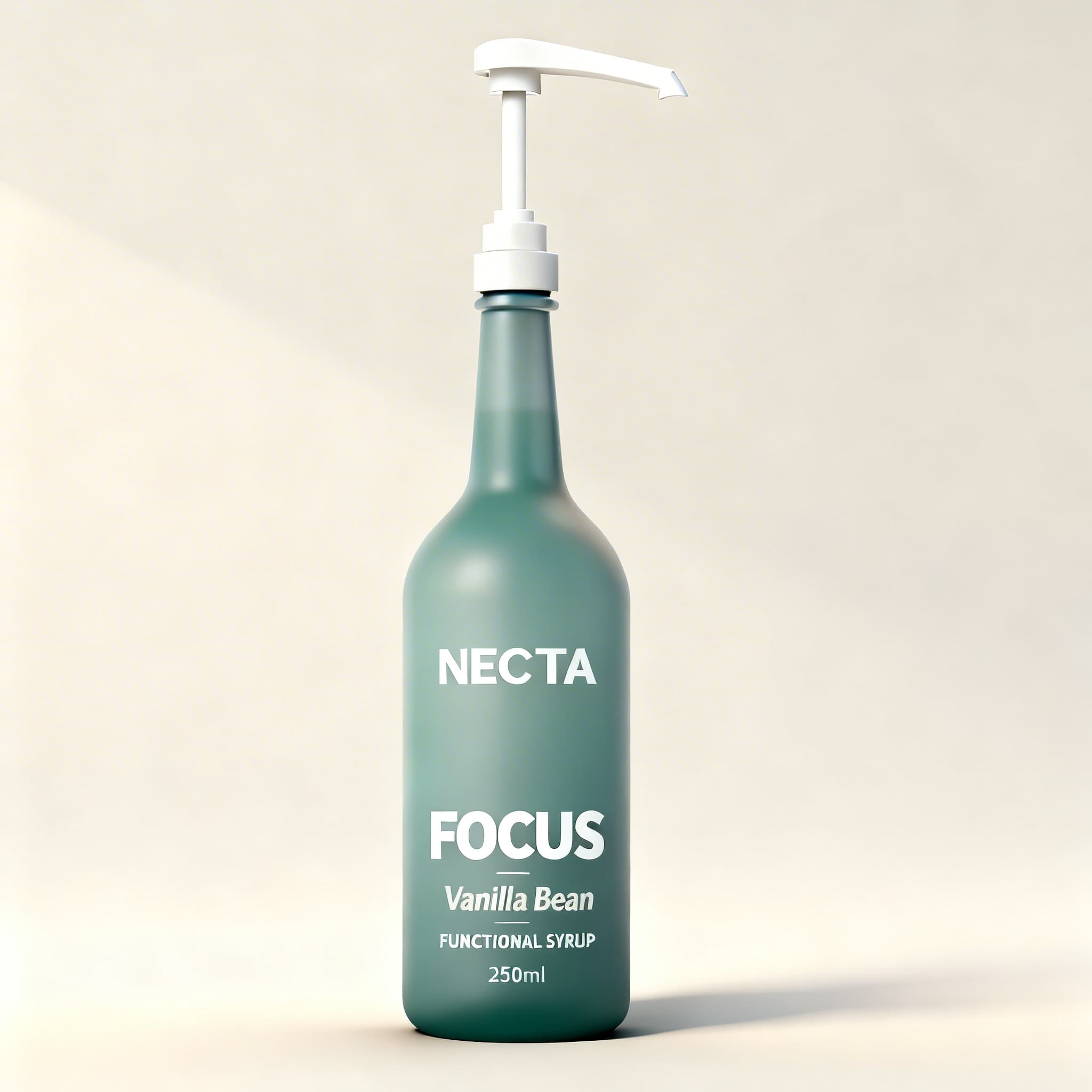
What Is an Adaptogen Pump Bottle?
An adaptogen pump bottle is a supplement delivery format in which a concentrated adaptogenic syrup or liquid extract is dispensed via an integrated pump mechanism — typically a screw-on actuator that delivers a precise, fixed volume per press. Each pump = one calibrated dose of the formula. Common volumes per pump range from 2ml to 5ml, delivering a predetermined amount of each active ingredient per press.
The format originated in pharmacy and cosmetics (hand sanitiser, lotion dispensers) and has been adopted by the premium supplement industry precisely because it solves one of the most persistent problems in supplement dosing: inconsistency.
Why Pump Format Matters for Adaptogens
Reproducible, Precise Dosing
Every dose from a pump mechanism is identical to the last. This isn't true of any other liquid supplement format. Droppers involve guesswork in counting drops and holding the bottle vertical. Spoons require exact levelling. Loose powder scoops vary by 20–30% depending on how tightly the powder has settled. When you're working with adaptogenic compounds where clinical doses are specific — 300mg KSM-66 ashwagandha, 200mg rhodiola — dose consistency genuinely matters.
An adaptogen pump bottle takes human error out of the equation. You press the pump the same number of times every morning, and you know you're getting exactly what the label says.
No Cross-Contamination or Oxidation
Every time you open a jar or measure from a tub, you introduce oxygen and moisture. A sealed pump bottle with a one-way valve mechanism prevents this — air doesn't enter the bottle as liquid is dispensed. This is significant for adaptogenic compounds that are sensitive to oxidation, including certain mushroom polyphenols and plant withanolides. Proper packaging extends shelf life and protects potency throughout the bottle's use.
Speed and Convenience
Two pumps into your morning coffee takes three seconds and requires zero thought. Compare this to: opening a capsule blister pack, swallowing multiple capsules with water, or measuring a powder and stirring until dissolved. The goal of daily supplement adherence is zero friction. A pump mechanism removes essentially all friction from the delivery process.
Adjustable Dosing
Unlike capsules (fixed dose) or sachets (fixed dose), a pump bottle allows you to adjust your daily intake. One pump for lighter supplementation, two for standard, three for higher-stress periods. This is particularly useful for adaptogens used for stress management — where you may want a lower dose during calm periods and a higher dose during sustained high-demand periods. The pump format preserves that flexibility while keeping each pump consistent.
How Adaptogens Are Used in Pump Bottle Format
Common pump bottle adaptogen routines:
- Morning coffee or matcha — 1–2 pumps of a focus formula (lion's mane, rhodiola, L-theanine) into your morning brew. Stir once. Zero additional steps.
- Pre-workout — 2 pumps of an energy and endurance formula (cordyceps, rhodiola) into a glass of water 30 minutes before exercise.
- Evening wind-down — 1–2 pumps of a calm formula (ashwagandha, reishi) into warm oat milk or chamomile tea.
- Directly from the pump — many formulas are palatable enough to take neat for maximum convenience.
What Makes a Good Adaptogen Pump Bottle?
The Formula
The pump mechanism is irrelevant if the formula inside isn't quality. Key criteria:
- Named, standardised extracts (KSM-66 ashwagandha, not "ashwagandha root")
- Individual ingredient doses disclosed per pump serving
- Clinically relevant amounts — match against research doses
- Third-party tested: potency and heavy metal certification
- Organic sourcing where possible
The Pump Mechanism
- Calibrated volume — the ml per pump should be stated, and the dose per pump calculated precisely from this
- Locking mechanism — a locking pump (twist to lock) prevents accidental dispensing in bags or travel
- Smooth, one-way valve — prevents air ingress into the bottle
- Appropriate pump resistance — light enough for one-handed use but not so sensitive that small touches dispense product
Packaging Quality
- Dark glass or UV-protective HDPE plastic to protect light-sensitive compounds
- Appropriate headspace to allow pump mechanism to reach bottom of bottle
- Clear volume markings to monitor remaining product
Pump Bottles vs Sachets vs Capsules for Adaptogens
| Format | Dosing Precision | Portability | Convenience | Flexibility |
|---|---|---|---|---|
| Pump bottle | High | Low (home use) | High | High |
| Sachet | High | High | High | Low |
| Capsule | Medium | High | Medium | Low |
| Powder tub | Low | Low | Low | Medium |
The pump bottle is optimal for home-based daily routine use; sachets for travel and on-the-go. Many committed adaptogen users use a pump bottle as their primary format and keep sachets of the same formula for travel.
Bottom Line
The pump bottle format removes the two biggest barriers to daily adaptogen adherence: dosing inconsistency and routine friction. When the formula inside is also quality — standardised extracts, clinical doses, third-party tested — it's one of the most effective supplement delivery systems available. See our guides on adaptogen syrups, liquid adaptogens UK, and what adaptogens are for broader context.